Location
Topics
-
[DA-038] GIS&T and Retail Business
Where should a retail business occur or locate within a region? What would that trade area look like? Should a retail expansion occur and how would that affect sales of other nearby existing locations? Would a new retail location have the right demographic or socio-economic customer base to be profitable? These are important questions for retailers to consider. Within the evolving landscape of GIS, there is more geospatial data than ever before about the potential customer. In retail, the application of maps and mapping technology is growing to include commercial real estate, logistics, and marketing to name a few. There has been an increased momentum across commercial applications for geospatial technologies delivered in an easy to comprehend format for a variety of end users.
-
[DC-02-003] Global Navigation Satellite Systems
A global navigation satellite system (GNSS), composed of user receivers, satellites, and ground control stations, is designed to provide accurate positions in 3-dimensional space. The Global Positioning System (GPS) is one of four GNSS freely available today. The fundamental GNSS approach is widely used today in cellphones, automobiles, autonomous vehicles, uncrewed aerial vehicles, and even as tagged luggage or bicycles. Significant improvements in the GNSS approach is available to the educated mapping scientist with an appropriate GNSS receiver/antenna, the appropriate environmental context, and processing of the satellite signals. This chapter provides the reader the fundamental concepts involved in the GNSS approach. With such knowledge the reader can make informed decisions about receivers, their use in the environment, and processing approaches for their unique applications.
-
[GS-01-004] Location Privacy
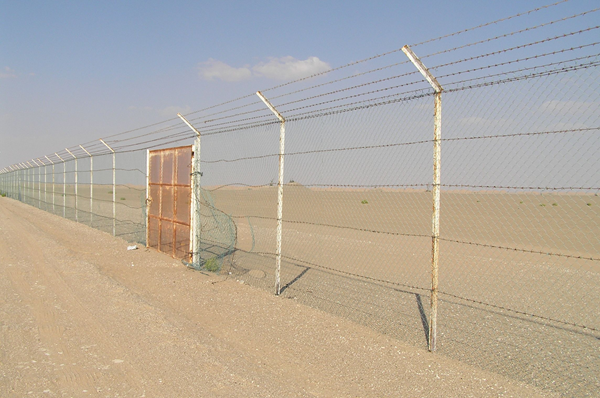 How effective is this fence at keeping people, objects, or sensitive information inside or outside? Location Privacy is concerned with the claim of individuals to determine when, how, and to what extent information about themselves and their location is communicated to others. Privacy implications for spatial data are growing in importance with growing awareness of the value of geo-information and the advent of the Internet of Things, Cloud-Based GIS, and Location Based Services.
 In the rapidly changing landscape of GIS and public domain spatial data, issues of location privacy are more important now than ever before. Technological trailblazing tends to precede legal safeguards. The development of GIS tools and the work of the GIS&T research and user community have typically occurred at a much faster rate than the establishment of legislative frameworks governing the use of spatial data, including privacy concerns. Yet even in a collaborative environment that characterizes the GIS&T community, and despite progress made, the issue of location privacy is a particularly thorny one, occurring as it does at the intersection of geotechnology and society.